




Bausch Foundation
A Foundation to Build From
The Bausch Foundation seeks to create human-centered change across the globe by providing access to safe, effective medicines and supporting health care education and causes.

 United States

The Broader Perspective initiative, launched in 2026, guides our sustainability progress and helps us understand each stakeholder’s needs, from patients to providers, retailers to regulators.
With partnerships and transparent collaboration across our industry, it is our ongoing goal to turn that perspective into sustainable innovations that drive human-centered change for generations to come. We see further and act together so people can see better to live better.
The Broader Perspective initiative, launched in 2026, guides our sustainability progress and helps us understand each stakeholder’s needs, from patients to providers, retailers to regulators.
With partnerships and transparent collaboration across our industry, it is our ongoing goal to turn that perspective into sustainable innovations that drive human-centered change for generations to come. We see further and act together so people can see better to live better.
As we continue working toward our corporate sustainability strategy, we want to highlight our progress on waste reduction, emissions reductions, solar energy generation and more. Read our annual Sustainability Impact Report to see The Broader Perspective in action.
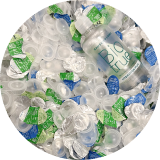
As the first and only eye care, lens care and contact recycling program in the U.S., our ONE by ONE program has collected more than 690,000 pounds (approximately 114 million units) of used eye health products through November 2025.
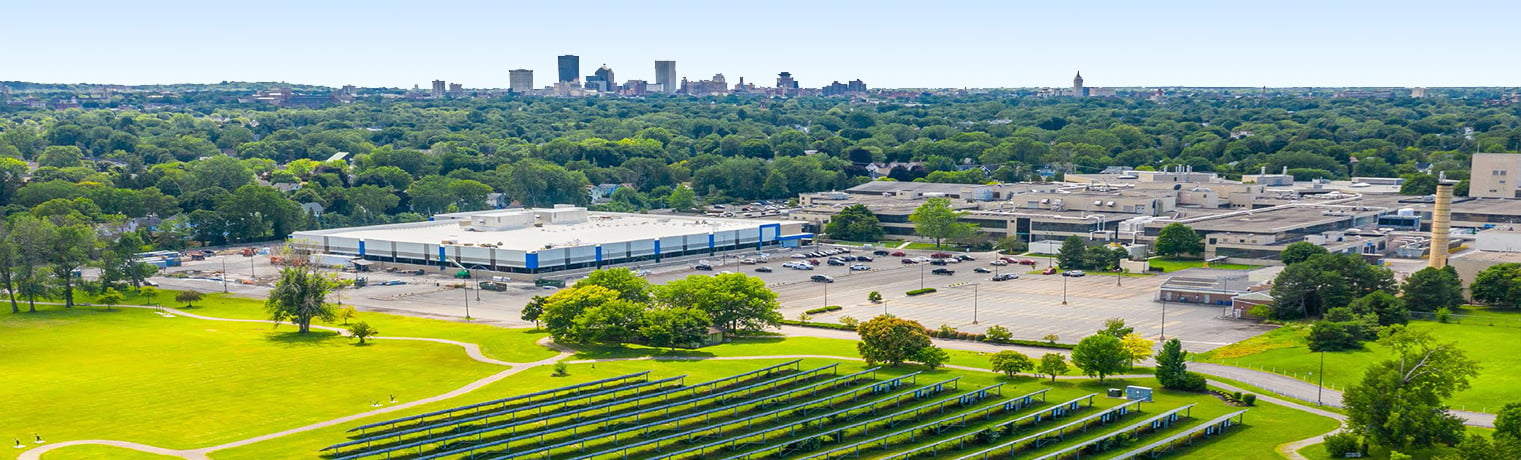
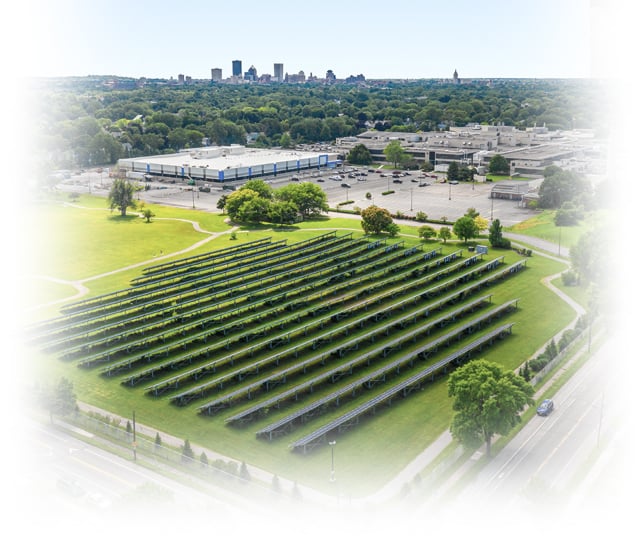
At the core of The Broader Perspective is our big picture sustainability goal – Net Zero by 2050. To support this, we use onsite solar at some of our locations, we are expanding our purchase of renewable electricity, and we set an annual 10% reduction target for Fuel, Energy, Water and Waste (FEWW) at our manufacturing sites – all to help drive steady and sustained progress.
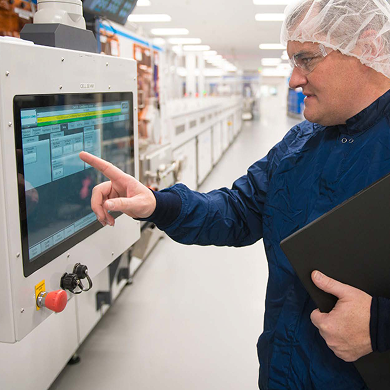

For nearly two centuries, our company has been defined by our ability to constantly evolve to the needs on the horizon. With The Broader Perspective, we are establishing a baseline of impacts through a contact lens life cycle assessment (LCA) to help us prioritize our sustainable innovations. We are also focusing on reducing our impacts today like replacing printed instructions for use (IFUs) with electronic IFUs (e-IFUs). By looking for ways to develop more sustainably-minded products and improve the impacts of our current products, we are creating sustainable progress for the next generation.
We’re addressing waste reduction from multiple perspectives. By streamlining packaging content and developing a global packaging database, we’re supporting Extended Producer Responsibility (EPR) reporting and identifying new opportunities to prevent waste in the first place. Our ONE by ONE recycling program keeps used contact lenses and packaging out of the landfill.


Seeing better to live better means breaking down barriers to affordability and access to necessary care. Our Patient Assistance Program offers assistance to those undergoing financial and/or insurance hardships, providing these products at no cost to you for up to one year, with an option to renew annually.
Call 1-855-770-0424 between 8 am – 5 pm EST or click below to see if you are eligible.
Our corporate sustainability is built on transparent progress. All relevant regulatory documentation and ESG communications materials can be found below.
Our corporate sustainability is built on transparent progress. All relevant regulatory documentation and ESG communications materials can be found below.
Environment
California Climate-Related Financial Risk Disclosure
EU Packaging & Packaging Waste Regulation and US Extended Producer Responsibility
As of September 2026, Bausch + Lomb’s official statement to our valued customers and stakeholders:
The European Packaging and Packaging Waste Regulation (PPWR) (EU 2025/40) and applicable Extended Producer Responsibility (EPR) requirements are currently being assessed through a comprehensive review of our packaging portfolio, supporting technical documentation, and associated supply chain processes. This review is intended to ensure alignment with regulatory requirements that became applicable within the European Union on 12 August 2026.
As part of this programme, we are actively collecting, reviewing, and validating information from our packaging suppliers and internal stakeholders. This includes technical documentation, declarations of conformity, material composition data, and other compliance-related information necessary to demonstrate compliance with applicable regulatory obligations.
In parallel, a number of implementing acts, delegated acts, and regulatory guidance required to support the full application of certain PPWR provisions have not yet been published by the European Commission. As a result, some regulatory requirements remain subject to further clarification. Consequently, we are not yet in a position to provide a complete PPWR compliance package for all relevant products and packaging components.
We have established a formal compliance programme within Bausch+ Lomb and are working closely with suppliers and business partners to obtain, assess, and maintain the documentation required to support compliance activities. We expect to make preliminary information and status updates available as supplier data is received, verified, and incorporated into our compliance assessments.
While this work remains ongoing, we can confirm that PPWR compliance is a strategic priority within our organisation. We are committed to meeting our regulatory obligations and implementing the processes, controls, and documentation necessary to support compliance across our operations.
We appreciate your understanding as this work progresses and will continue to provide updates as additional information becomes available.
How is Bausch + Lomb addressing its carbon emissions?
Our commitment to achieving Net Zero by 2050 is at the core of our sustainability strategy. Our approach to reaching net zero is two-fold – reducing our emissions through efficiency upgrades and increasing the renewable energy we generate and purchase. A few of our initiatives include:
Our net zero commitment currently encompasses our Scope 1 (direct fuel use) and Scope 2 (electricity) emissions, but in 2025 we began tracking our Scope 3 (value chain) emissions and exploring ways to lower them. Read more about our emissions reduction efforts in our annual sustainability report.
What programs or initiatives does Bausch + Lomb have to reduce waste?
From manufacturing to end of life, we are reducing the waste generated from our operations and products.
How is Bausch + Lomb incorporating sustainability into new product innovation and development?
For nearly two centuries, Bausch + Lomb has been at the forefront of eye health innovation. Beyond safety, quality and performance, sustainability is a top consideration in our product R&D. This allows us to integrate sustainable impacts from the beginning of development. Our sustainable innovations include:
Are there any recycling programs for contact lenses, blister packs and solution bottles?
Yes, in the U.S. Partnering with Terracycle, we created the first and only contact lens recycling program – ONE by ONE. It is free to patients and available at eye care professional and doctor offices. Recycle your contact lenses, blister packs and solution bottles and add to the more than 690,000 pounds (approximately 114 million units) that have been collected as of November 2025. Find a recycling location here.
How is Bausch + Lomb incorporating or promoting digital eye care trends and artificial intelligence (AI)-powered treatment?
We are committed to using AI responsibly and ethically to expand patient access and high-quality eye care. We developed the Eyetelligence® Surgical Planning Software Platform to intuitively consolidate all diagnostics for a patient’s procedure into a single, easy-to-use dashboard, saving time and simplifying logistics and information flow across care teams.
We are also developing the Orphia™ Digital Health Platform to reduce the operational burden on physicians by embedding AI agents into daily workflows. The initial offering will focus on pre-surgery cataract education, with additional AI capabilities for ophthalmology planned over time.
What is Bausch + Lomb doing to expand access to eye care to all populations?
The global nature of our business gives us the opportunity to help communities around the world. Through the Bausch Foundation, we provide donations to improve disease prevention, patient outcomes and quality of life for people around the world. In 2025, the Bausch Foundation donated nearly $500,000 to philanthropic and community causes.
We also support Lions Clubs International’s Recycle for Sight program that collects, cleans and prepares used eyeglasses for redistribution to people. This program provides glasses to the people that need them most and keeps eyewear out of the landfills – a sustainable win-win.
What is Bausch + Lomb doing to respect and protect human rights?
2025 marked the first year of implementation of our Global Human Rights Policy. This policy reaffirms Bausch + Lomb’s commitment to respecting human rights in our global operations and value chain, including complying with laws and adhering to the United Nations Guiding Principles on Business and Human Rights. It also sets out expectations for our employees and business partners. To promote awareness, the Policy was translated into 18 languages and communicated companywide, with 95% of employees reviewing and acknowledging it. We also integrate human rights considerations into governance and risk management processes to help identify, assess and address potential risks and aim to continuously strengthen our approach.
For further information, review our human rights policies and statements below:
The website you are about to visit is not affiliated with Bausch + Lomb Incorporated. Bausch + Lomb is not responsible for the content, format, maintenance, or policies of the website you are about to enter and does not monitor non-affiliated websites for accuracy. Links to non-affiliated websites are provided as a convenience; they do not constitute an endorsement or support of any programs, products, or services associated with the website.